
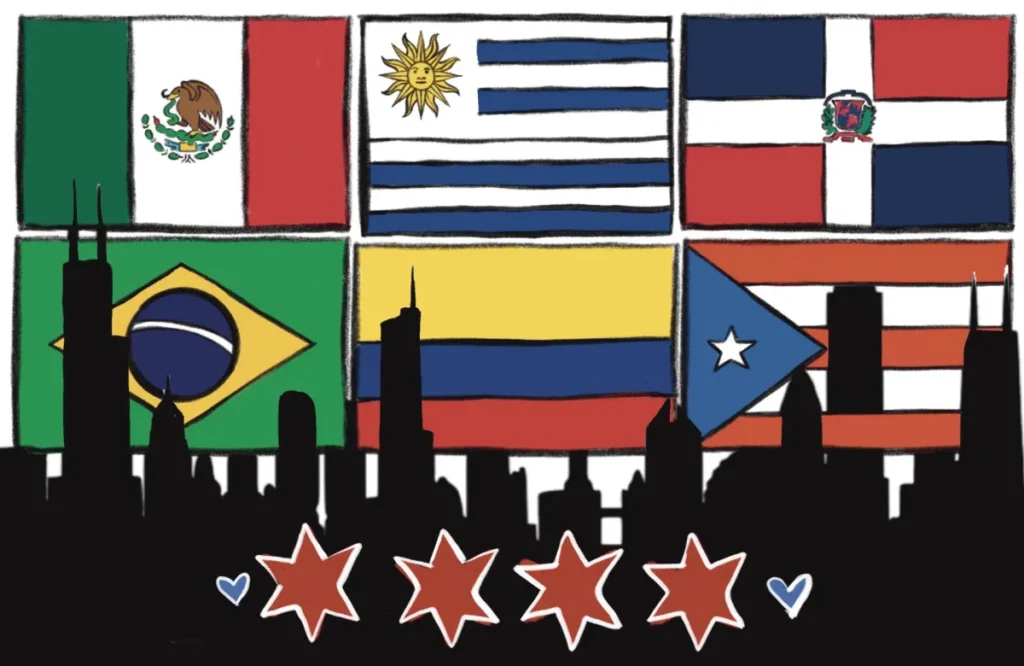
As the U.S. Hispanic population prepares to reach 70 million, this year’s Hispanic Heritage Month, occurring from Sept. 15 to Oct 15, looked to be only celebrations but was ultimately followed by political turmoil.
These dates align with independence days for several Latin American countries including México, Guatemala, Honduras and Costa Rica.
The month of celebration actually began as a commemorative week in June 1968. Later in 1987, in an effort to give more time to plan events and learn about Hispanic culture, U.S. Rep. Esteban Torres of California introduced a bill to expand the week to a full month. Sen. Paul Simon of Illinois then sponsored a similar bill that ultimately passed Congress and was signed by President Ronald Reagan in 1988.
As part of the celebration, the City of Chicago highlights the achievements of various local leaders, artists and business owners on their website. The page even includes students such as Taína Ramirez, who has worked for the Segundo Ruiz Belvis Cultural Center for nearly five years.
The center is the longest-standing Latine cultural center in Chicago and inspired her to learn more about her Latina identity.
Aidan Sebastian Ramos, a DePaul freshman majoring in Latin American and Latino studies, said Hispanic Heritage Month is a way for Latine people to finally get recognition in the country beyond stereotypes like being “hardworking.”
Like many other students, Ramos takes advantage of the organized events hosted on campus and beyond throughout the month, as it allows him to be proud of his heritage.
As a Mexican American, he celebrated Mexican Independence Day by going out to a festival in Chicago donning a luchador mask and draping a big Mexican flag around himself.
“It’s just nice to have a day where I can just be proud,” Ramos said. “Because I personally feel like Latinos are especially discriminated against.”
Yoalli Rodríguez, a DePaul assistant professor of Latin American and Latino studies, sees this month as a way to recognize how Latine communities have shaped Chicago through culture, labor and political organizing.
“Our heritage lives in family stories, murals, music, local businesses and struggles for housing, education, health and dignity,” Rodríguez said.
Rodríguez said this month can act as a time of “pride and connection” across the Hispanic community, but it’s also an opportunity to tackle the experiences of those who remain marginalized.
“There is no single Hispanic or Latino experience,” Rodríguez said. “For me, meaningful celebration also requires confronting anti-Blackness, discrimination against Indigenous people, sexism and homophobia within our communities.”
At DePaul, Hispanic Heritage Month is recognized the whole month, with the Latinx Cultural Center bolstering their programming with events celebrating Latine culture.
Flor Reza, the program manager for the center, said this month functions as a dedicated time to “celebrate, educate and learn” about what it means to be Hispanic and Latine.
Reza said the center encourages all students to show up, learn and connect with Latine culture by participating in the many events like Feria that are hosted throughout the month.
“We invite people to come be in community with us,” Reza said. “Just creating that really safe space for students to experience what it means to be Latino and what the culture can show.”
The past year has been a turbulent time for the Latine community in Chicago due to Immigration and Customs Enforcement throughout the city and continued antagonism by the Trump administration.
Ramos said the situation has brought the Latine community closer together for this year’s heritage month.
“What I’ve seen is that there’s more solidarity,” Ramos said. “But it’s also kind of bad because of the circumstances that had to happen.”
While Operation Midway Blitz officially ended in November 2025, Rodríguez said there have been lasting effects. On the first day of Hispanic Heritage Month, state officials and local leaders gathered to remember its impact and demand accountability from those involved.
“That context gives the month a particular urgency,” Rodríguez said. “Gathering, making art and celebrating can affirm our presence and belonging. But grief and anger also belong in this month, and I think it’s important to acknowledge it.”
 English
  Español de México