
The Day of the Dead is about remembering and temporarily welcoming the souls of loved ones back to the world of the living. In Chicago, the weekend is marked by special ofrendas, or altars, performances and more.
Go shopping in Little Village this weekend
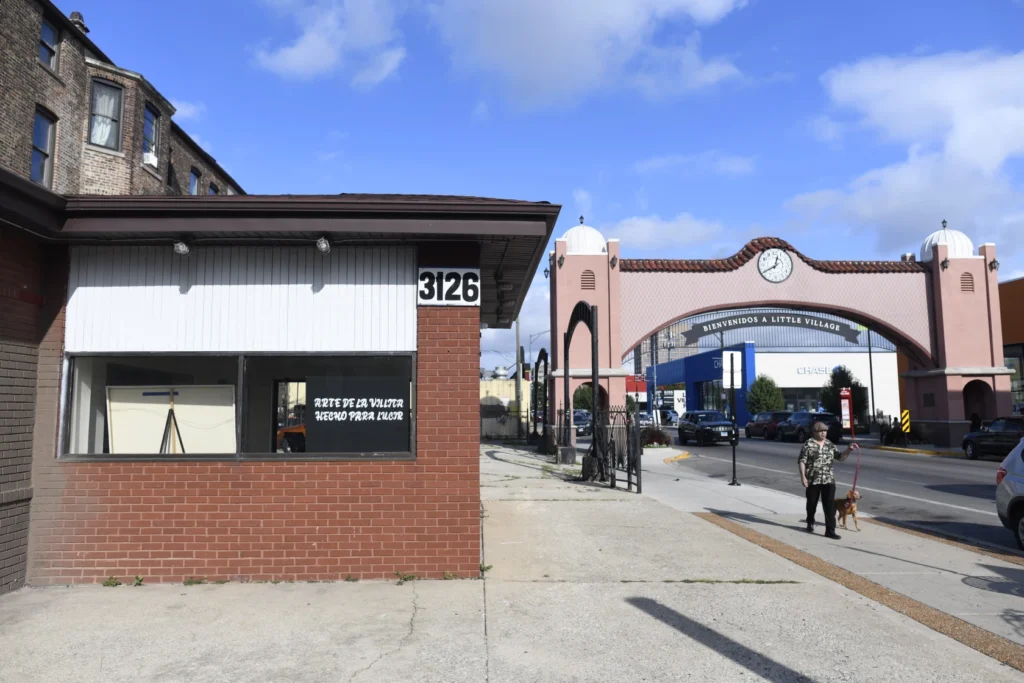
The Little Village Chamber of Commerce is putting on an event called Xempasúchil on Saturday and Sunday. The Xempasúchil, sometimes written as Cempasúchil, are orange and yellow marigolds believed to guide the dead back home. The weekend-long street fest, inspired by the flowers, will run from 11 a.m. to 6 p.m. both days, with more than 50 businesses along 26th Street participating. There will be discounts at select restaurants and shops, plus photo booths, unique ofrendas and live catrinas or catrines, the well-dressed skeleton figures that remind us all of our eventual mortality. Enjoy some classic sweet breads at Panadería Nuevo Leon, then head to Ester Fashion Boutique to browse dozens of beautiful dresses, then check out some local artwork at the new gallery Te-Qu, near the Little Village Arch.
Purchase pan de muerto from Mexican bakeries
There are plenty of Mexican delicacies to enjoy all across Chicago, but pan de muerto (or bread of the dead, in English) is only available during a certain time of year. In the weeks leading up to the Day of the Dead, local bakeries are selling the sweet bread adorned with skulls and crossbones. They are typically coated in sesame seeds and orange zest, and many families place them on their home ofrendas.
Here are several Chicago bakeries with pan de muerto for sale:
- Acapulco Bakery, 6044 W. 63rd St.
- Artemio’s Bakery, 3904 N. Sheridan Rd. or 1443 N. Milwaukee Ave.
- Panadería El Nopal, 3648 W. 26th St.
- La Espiga de Oro Bakery, 2458 S. Drake Ave.
- Panadería El Acambaro, 1720 W. 18th St.
- Panadería Nuevo Leon, 1634 W. 18th St.
- Rosy’s Bakery, 3237 W. 26 St.
Halloween is this weekend. But after all of the spooky storytelling, costume contests and trick-or-treating, Día de Muertos, or Day of the Dead in English, happens each year on Nov. 1 and 2.
The holiday, with roots in indigenous Mesoamerican and Spanish Catholic traditions, has been celebrated in Mexico and Central Latin American countries for centuries. Most people associate it with the sugar skulls, marigolds and family photos that are placed on ofrendas — which, in English, are altars— inside people’s homes.
Families believe that the veil that exists between the natural world and the spiritual world thins out between Oct. 31 and Nov. 2, making way for our ancestors to come back to visit us for a few nights. In addition to the flowers and photos, people might leave out their deceased loved ones’ favorite foods, bottles of liquor or personal items.
The tradition has expanded beyond Latin America and into U.S. cities like Chicago, where some neighborhoods go all out for the celebration. Here are a few special ways to celebrate the holiday in Chicago.
 Español de México
 English